
Blog
How to Set Up a Fish Tank, Step by Step

Quick heads up: this post has affiliate links, mostly to Amazon. If you buy through them, Smart Pet House earns a small commission at no extra cost to you. Commissions keep this site free to read. We only recommend products we would buy for our own pets.
Most first tanks fail in the first two weeks, and the cause is boring: chlorine in the water, ammonia buildup, too many fish on day one. The setup only takes one afternoon, but the water needs two patient weeks after. Get the order right and the fish part gets easy.
Buy this first
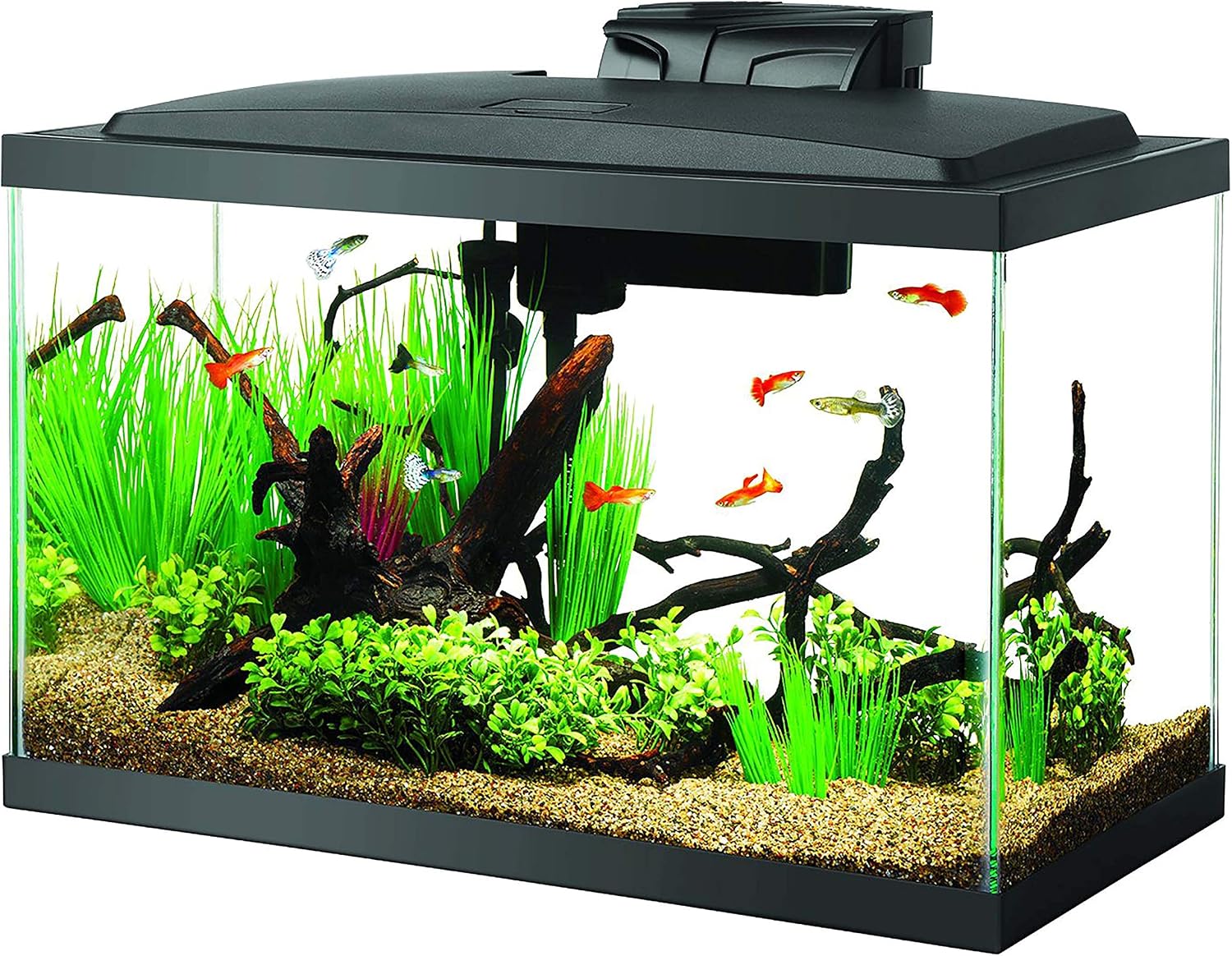
A starter kit saves money and guesswork. Each kit below packs a glass tank, LED hood, filter, preset heater, thermometer, net, plus food and water conditioner samples.
Aqueon 10-Gallon Starter Kit. Fits a desk or counter. Best for a betta or a small school of tetras. About $63, rated 4.2 stars. Check price on Amazon
Tetra 20-Gallon Complete Kit. Fits a stand and holds more fish with steadier water. About $119, rated 4.2 stars. Check price on Amazon

API Tap Water Conditioner, 16 oz. Tap water carries chlorine, and chlorine burns fish gills. One small dose per bucket strips it out. About $8, rated 4.2 stars. Check price on Amazon

API Freshwater Master Test Kit. Liquid tests for ammonia, nitrite, nitrate, and pH. Strips aren’t always effective, but these drops tell the truth. One kit covers about 800 tests. Roughly $36, rated 4.8 stars. Check price on Amazon

Add gravel and decor from any pet store. Skip soap on everything, forever. Full kit rankings live in the smart fish tank guide.
Step 1: Pick the spot
Set the tank on a level stand away from windows. Direct sun grows algae and swings the water temperature. Keep the tank near an outlet and off a busy walkway. A filled 20-gallon tank weighs over 200 pounds, so make sure any shelving can bare serious weight.
Bigger tanks forgive mistakes. Water in a 20-gallon holds temperature and chemistry steadier than water in a 10-gallon. First tank, tight space: take the 10-gallon. Room on a stand: take the 20-gallon.
Step 2: Rinse gravel and decor
Pour the gravel into a bucket. Run tap water over it, stir, drain, repeat until the water runs clear. Rinse decor and fake plants the same way. Soap and detergents kill fish, so you want to clean anything you’re adding to their environment.
Step 3: Build the tank floor
Spread gravel 1 to 2 inches deep, sloped a bit higher at the back. Set decor and plants. Leave open swimming room in the middle and a clear view from the front glass.
Step 4: Install filter and heater
Hang or set the filter per the kit guide. Place the heater near the filter flow so warm water spreads. Leave both unplugged for now. Dry glass plus a hot heater cracks glass.
Step 5: Fill and treat the water
Set a clean plate on the gravel and pour water over the plate. The plate keeps the gravel bed in shape as the water slowly overflows the plate and fills the tank without shifting the gravel. Fill the tank, then add water conditioner at the dose on the bottle. Treat every bucket the same way.
Step 6: Start the gear and wait a day
Plug in the filter and heater. Stick the thermometer on the glass. Both kits hold water near 78 degrees on their own. Run the tank a full day, then confirm the temperature holds steady.
Step 7: Cycle the tank
Fish waste turns into ammonia, and ammonia poisons fish. Good bacteria grow in the filter and eat ammonia, then a second group eats the leftovers. A brand new tank has zero bacteria. Building the colony takes time, and the test kit tells you how it’s progressing.
Run the filter for one to two weeks with no fish. Test ammonia and nitrite every few days. Add fish only after both read zero on two straight tests. Impatience kills more first fish than disease does.
Step 8: Add fish slowly
Float the sealed bag in the tank for 15 to 20 minutes so temperatures match. Open the bag, add a cup of tank water, wait 10 minutes, then net the fish in and throw the bag water away.
Start with two or three small fish. Test the water in three days. Add a few more fish the next week. Small steps keep ammonia flat while the bacteria colony grows to match the load.
Your first month
- Feed one small pinch once a day. Uneaten food rots into ammonia, so less beats more.
- Change 25% of the water every week. Treat the new water first.
- Rinse the filter cartridge in the bucket of removed tank water. Tap water kills the bacteria you grew.
- Test the water every week and write the numbers down.
Classic first-tank mistakes
- A full stocking list on day one
- Feeding three times a day out of love
- Soap, sprays, or lotion near the water
- Skipping water conditioner at a water change
- Swapping the whole filter cartridge at once and throwing the bacteria colony in the trash
Bottom line
Kit, gravel, conditioner, test kit, two patient weeks. Follow the order above and your first tank stays clear, calm, and alive. The fish are the easy part. Water is the job.